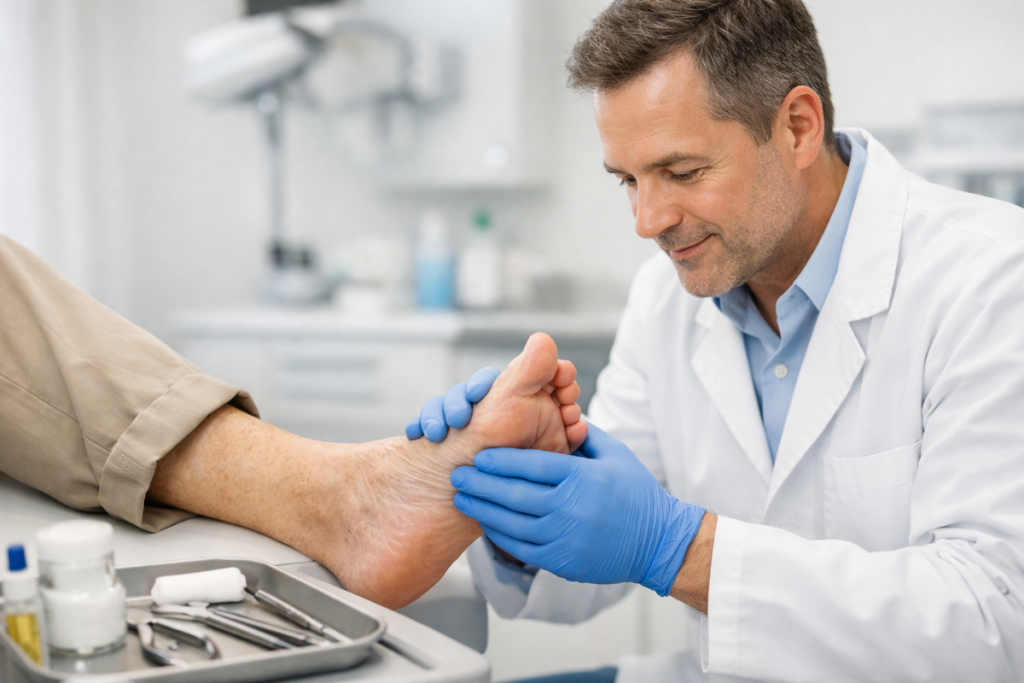
Diabetes can affect nearly every system in the body—but one of the most overlooked (and most preventable) complications happens in the feet. Diabetic foot problems often start quietly: a small blister, a bit of numbness, a callus that seems harmless. Without the right care, those “small” issues can become serious infections, diabetic foot ulcers, and in worst cases, amputation.
The good news: with consistent habits and early professional support, most complications are preventable. This guide covers why diabetes affects the feet, warning signs, a daily diabetic foot care routine, when to see a podiatrist, and how prevention can dramatically reduce the risk of ulcers and amputations.
Why Diabetes Affects the Feet
Diabetes increases foot risk mainly through three pathways:
1) Nerve damage (diabetic neuropathy)
Over time, high blood glucose can damage nerves—especially in the legs and feet. This may reduce your ability to feel:
- Pain
- Heat or cold
- Pressure
- Cuts or blisters
When sensation is reduced, injuries can go unnoticed. A blister from a shoe, a pebble in your sock, or a small cut can worsen over days or weeks without you realizing it.
2) Reduced circulation (peripheral arterial disease)
Diabetes can narrow and stiffen blood vessels, limiting blood flow to the feet. Poor circulation means:
- Wounds heal more slowly
- Skin becomes fragile and dry
- Infections become harder to fight
This is one reason ulcer prevention is so important—because once a wound forms, it may not heal easily.
3) Higher infection risk
Diabetes can impair immune function. Combine that with slow healing and reduced sensation, and even small wounds can become infected quickly.
Key takeaway: Diabetic foot complications are often a chain reaction—numbness → unnoticed injury → slow healing → infection—but that chain can be interrupted with daily care and early treatment.
The Stakes: Practical Statistics You Should Know
Understanding the numbers helps explain why clinicians emphasize prevention:
- Diabetic foot ulcers are common: Many people with diabetes will develop a foot ulcer during their lifetime (often cited around 15–25%).
- Ulcers drive amputations: The majority of diabetes-related lower-limb amputations are preceded by a diabetic foot ulcer.
- Prevention works: Regular foot checks, better footwear, early treatment of calluses and skin breakdown, and prompt care for wounds can significantly reduce ulcer complications.
Even if you feel “fine,” diabetic foot problems often progress without pain. Prevention is not an overreaction—it’s a smart, evidence-based strategy to protect mobility and quality of life.
Warning Signs to Watch For
If you have diabetes, treat the following as important signals—especially if they are new, worsening, or only on one foot:
Skin and wound changes
- Cuts, cracks, blisters, or sores that don’t improve within a few days
- Redness, swelling, warmth, or tenderness (may signal infection)
- Drainage on socks or a persistent wet spot in shoes
- Black or blue discoloration (urgent concern)
Sensation changes
- Numbness, tingling, burning, “pins and needles”
- Feeling like you’re walking on cotton, sand, or pebbles
- Increased pain at night (can occur even with neuropathy)
Structural or pressure changes
- Calluses that keep returning in the same spot
- Corns, thickened skin, or areas of high pressure
- Changes in foot shape (bunions, hammertoes, Charcot changes)
- New difficulty fitting into shoes
Circulation symptoms
- Cold feet, pale or shiny skin, hair loss on legs/feet
- Foot pain when walking that improves with rest
- Slow-to-heal toenail or skin injuries
Urgent signs (same-day medical attention):
- Spreading redness, pus, fever, chills
- A wound with a foul odor
- Black tissue, sudden color change, severe swelling
- New severe pain with a pale/cold foot
Daily Diabetic Foot Care Routine (10 Minutes That Can Save Your Feet)
A consistent routine is one of the most effective tools for diabetic foot care and ulcer prevention. Here’s a practical, step-by-step checklist:
1) Inspect your feet-every day
Look at:
- Tops, soles, heels
- Between toes
- Around nails
- Any areas that rub in shoes
Use a mirror or your phone camera if it’s hard to see the bottom of your feet. If vision or mobility is limited, ask a family member for help.
Tip: Check at the same time daily (after shower or before bed) to build the habit.
2) Wash gently and dry thoroughly
- Use warm (not hot) water—test with elbow/thermometer if you have neuropathy.
- Avoid soaking for long periods (can dry out skin).
- Dry well, especially between toes.
3) Moisturize—but not between toes
Apply lotion to prevent cracks, but avoid moisture between toes, which can encourage fungal growth.
4) Nail care: trim safely
- Trim straight across
- File sharp edges
- Don’t cut corners deeply (reduces ingrown nails)
If nails are thick, difficult to reach, or you have poor vision/neuropathy, let a podiatrist handle trimming.
5) Callus and corn care: don’t DIY with blades or acids
Avoid:
- Razors/blades
- “Corn remover” pads with salicylic acid
- Strong chemical treatments
These can cause burns and ulcers in diabetic skin. Calluses should be reduced by a professional and addressed with offloading and better footwear.
6) Sock and shoe basics
- Wear clean, dry socks daily (seamless if possible)
- Choose moisture-wicking material if you sweat
- Avoid tight elastic bands that restrict circulation
Shoes should:
- Fit well with room for toes
- Have a supportive sole
- Avoid rubbing and pressure points
Daily tip: Before putting shoes on, check inside for pebbles, rough seams, or foreign objects.
7) Never walk barefoot—even at home
Barefoot walking increases risk of cuts, burns, splinters, and unnoticed injuries. Use supportive slippers or house shoes with a protective sole.
8) Support circulation
- Move ankles and toes throughout the day
- Avoid sitting for long periods without shifting
- Ask your clinician about safe exercise
- Don’t smoke (smoking worsens circulation)
Diabetic Foot Ulcer Prevention: The “Pressure + Skin” Rule
Most diabetic foot ulcers are caused by a combination of:
- Pressure (from shoes, foot deformities, gait changes)
- Skin breakdown (dry skin, callus, friction, minor trauma)
- Reduced sensation and delayed healing
That’s why prevention isn’t only about “checking for wounds.” It’s also about reducing pressure:
- Proper shoe fit and supportive insoles
- Treating deformities early
- Regular callus care
- Custom orthotics or diabetic shoes when indicated
If you repeatedly get a callus in the same spot, think of it as a “hot zone.” It may be the warning sign before an ulcer forms.
When to See a Podiatrist
A podiatrist plays a key role in preventing ulcers and amputations by identifying risks early and treating problems before they escalate.
Schedule a podiatry visit if you have:
- Any wound, blister, or sore that isn’t improving within 48–72 hours
- New numbness, burning, or tingling
- Recurrent calluses/corns
- Ingrown toenails or thick fungal nails
- Foot deformities (bunions, hammertoes) or changing foot shape
- A history of ulcers, infections, or amputations
- Poor circulation symptoms or known peripheral arterial disease
How often should you be evaluated?
This varies based on risk:
- Lower risk: at least annual diabetic foot exams
- Higher risk (neuropathy, deformities, prior ulcer): more frequent visits, often every 1–3 months
During an evaluation, a podiatrist may:
- Check sensation (monofilament testing)
- Assess circulation and skin integrity
- Identify pressure points and gait issues
- Provide preventive nail and callus care
- Recommend footwear, inserts, offloading devices, or referrals if blood flow is reduced
How Prevention Reduces Amputations
Amputation is not an inevitable outcome of diabetes—it’s often the endpoint of a preventable pathway. Prevention reduces amputations by:
Catching ulcers early
Early ulcers are easier to treat. Delayed care increases infection depth and risk.
Reducing pressure through offloading
Devices like specialized shoes, inserts, or boots can take pressure off the wound so it can heal.
Managing infection promptly
Small infections can become limb-threatening quickly in diabetes. Early treatment matters.
Addressing circulation issues
If blood flow is limited, healing is harder. Timely vascular evaluation can be lifesaving for the limb.
Building consistent monitoring habits
Daily checks plus regular professional exams create a safety net—problems get caught before they become emergencies.
Bottom line: prevention protects not just feet, but independence—walking, working, exercising, and living without constant worry.
Practical Tips You Can Start Today
Here are high-impact habits that support diabetic foot care and ulcer prevention:
- Keep your A1C and blood glucose in your target range (ask your clinician for your personal goals).
- Take shoes seriously—fit matters more than style when you’re preventing ulcers.
- Replace worn shoes and flattened insoles regularly.
- Treat “minor” foot issues as important: calluses, cracks, redness, and rubbing are early warnings.
- If you can’t feel your feet well, assume injuries can happen unnoticed—inspect daily.
- Keep a small “foot care kit”: mirror, moisturizer, nail file, clean socks, and a basic first-aid supply (no harsh antiseptics without guidance).
https://shorturl.fm/6D9hE