Your feet support your entire body and endure constant pressure, friction, and exposure throughout the day. Despite this, they are often overlooked in daily hygiene routines. A consistent foot care routine is essential not only for comfort but also for preventing infections, injuries, and long-term complications. This is especially important for individuals with diabetes, circulation issues, or those who spend long hours standing or walking.
Below is a practical, step-by-step daily foot care routine designed to keep your feet healthy and problem-free.
1. Wash Your Feet Daily
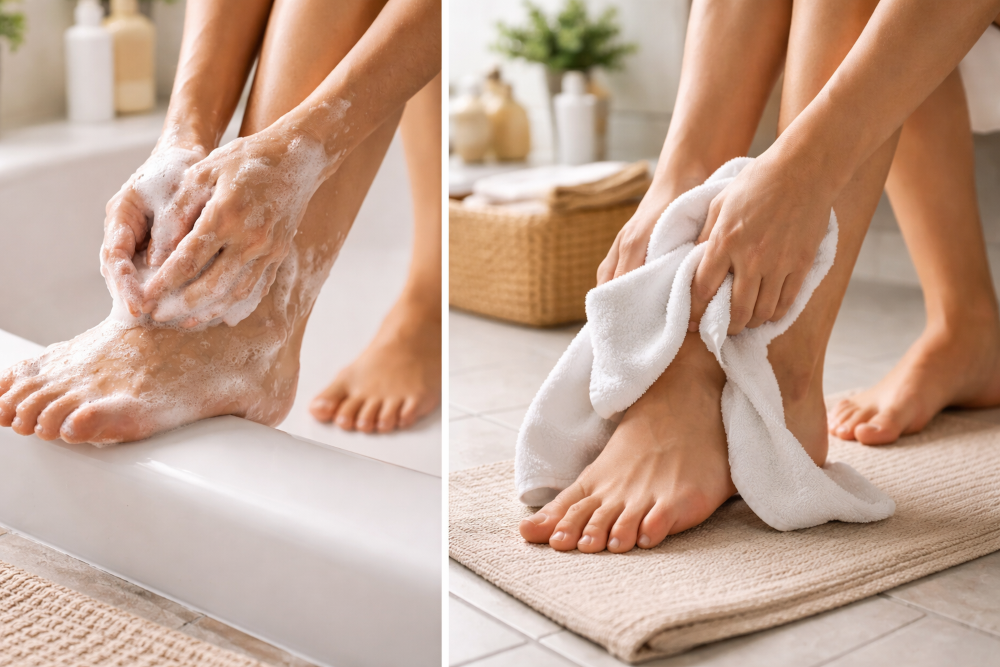
Start your routine by washing your feet once a day using warm water and a mild soap. Avoid hot water, as it can dry out the skin and cause irritation.
Gently clean all areas of your feet, including the soles, heels, and between your toes. You can use your hands or a soft cloth, but avoid harsh scrubbing tools that may damage the skin. Limit soaking to a few minutes, as prolonged exposure to water can weaken the skin’s natural barrier.
Daily washing removes dirt, sweat, and bacteria, reducing the risk of odor, fungal infections, and skin irritation.
2. Dry Your Feet Thoroughly
After washing, dry your feet completely using a clean towel. Pay special attention to the areas between your toes, where moisture can easily become trapped.
Pat your feet dry rather than rubbing aggressively, as this helps prevent irritation, especially if your skin is sensitive. Ensuring your feet are completely dry is crucial, as damp environments encourage fungal growth such as athlete’s foot.
3. Moisturize to Maintain Skin Health
Applying a moisturizer helps keep the skin on your feet soft, flexible, and less prone to cracking. Use a good-quality foot cream or lotion, ideally one designed to hydrate dry or rough skin.
Focus on areas like the heels and soles, which are more likely to become dry. However, avoid applying moisturizer between the toes, as excess moisture in these areas can increase the risk of fungal infections.
Well-moisturized skin is less likely to develop painful cracks or fissures, which can become entry points for bacteria.
4. Trim Your Toenails Properly
Toenail care is an important part of foot health. Trim your toenails regularly, typically every one to two weeks, depending on how quickly they grow.
Cut nails straight across rather than rounding the edges. This helps prevent ingrown toenails, which can become painful and infected. Use clean, sharp nail clippers and avoid cutting nails too short. If needed, gently file the edges to smooth any rough corners.
Proper nail care reduces the risk of injury, discomfort, and infection.
5. Inspect Your Feet Daily
Take a few minutes each day to examine your feet closely. This is especially important if you have diabetes or reduced sensation in your feet.
Look for:
-
Cuts, blisters, or sores
-
Redness or swelling
-
Cracked or peeling skin
-
Changes in nail color or thickness
-
Signs of infection such as warmth or discharge
If you have difficulty seeing the bottom of your feet, use a mirror or ask someone to assist you.
Daily inspection allows you to catch small problems early before they develop into serious conditions.
6. Check Your Shoes Before Wearing Them
Before putting on your shoes, quickly check the inside for any debris, such as small stones, rough edges, or foreign objects.
Also ensure your shoes are dry and free from moisture. Damp shoes can lead to fungal infections and unpleasant odors.
Wearing properly fitting shoes is equally important. Shoes that are too tight can cause pressure points, while loose shoes may lead to friction and blisters. Choose footwear that offers good support, cushioning, and breathability.
7. Wear Clean, Socks
Socks play a key role in maintaining foot hygiene. Choose socks made from breathable or moisture-wicking materials to help keep your feet dry throughout the day.
Change your socks daily, or more often if your feet become sweaty. Avoid wearing damp or dirty socks, as they can contribute to bacterial and fungal growth.
Proper socks help reduce friction, prevent odor, and support overall foot comfort.
8. Rotate and Maintain Your Footwear
Avoid wearing the same pair of shoes every day. Rotating your footwear allows shoes to dry out completely between uses, reducing moisture buildup.
Check your shoes regularly for signs of wear and tear, such as worn soles or damaged linings. Replace shoes when they no longer provide adequate support or comfort.
Maintaining your footwear helps prevent unnecessary strain on your feet and reduces the risk of injury.
9. Protect Your Feet in Public Areas
When in public places such as gyms, swimming pools, or communal showers, always wear protective footwear like flip-flops or sandals.
This reduces your exposure to fungi and bacteria that thrive in warm, moist environments. Walking barefoot in these areas significantly increases the risk of infections such as athlete’s foot or plantar warts.
10. Schedule Regular Medical Checkups
Even with a consistent daily routine, professional foot care is essential. Regular checkups with a podiatrist or healthcare provider can help identify potential issues early.
Seek medical attention if you notice:
-
Persistent pain or swelling
-
Non-healing wounds or ulcers
-
Thickened, discolored, or brittle nails
-
Signs of infection
For individuals with diabetes or circulation problems, routine foot examinations are particularly important and should not be overlooked.
A daily foot care routine is a simple yet powerful way to protect your overall health. By dedicating just a few minutes each day to washing, drying, moisturizing, trimming nails, inspecting your feet, and checking your footwear, you can prevent many common foot problems before they start.
Consistency is key. Making foot care a regular habit not only improves comfort but also supports long-term mobility and well-being. Combined with proper footwear and routine medical checkups, these small daily actions can make a significant difference in maintaining healthy, pain-free feet.
fhpnpquigikknrjnglxpopnvyeesyi